Iran's Supreme Leader Mojtaba Khamenei Absent as Senior Officials Attend Ayatollah's Funeral
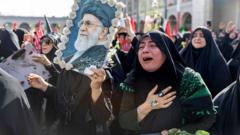
Mojtaba Khamenei Remains Absent During Iran's Massive Funeral Proceedings for Late Supreme Leader
As millions gather in Tehran for the funeral of the late Ayatollah Ali Khamenei, the conspicuous absence of his successor, Mojtaba Khamenei, has sparked intense global speculation. While senior regime figures and high-ranking officials have united to pay their respects, the new leader has not been seen in public since his appointment earlier this year.
Background / Context
The late Supreme Leader, Ali Khamenei, governed the Islamic Republic from 1989 until his passing in February. His tenure was marked by a firm policy of regional confrontation, characterized by the sustained support of various anti-US and anti-Israel factions across the Middle East, including Hamas, Hezbollah, and the Houthis. His death during the ongoing US-Israel conflict has created a profound power vacuum.
Official funeral proceedings commenced on Friday, with the government staging a series of events across Iran and Iraq. Authorities project that between 12 and 20 million people will participate in what state media describes as the "funeral of the century." The body is currently lying in state at Tehran's Grand Mosalla religious complex, with services led by prominent cleric Jafar Sobhani.
Key Developments
- Iranian President Masoud Pezeshkian, Parliamentary speaker Mohammad Baqer Qalibaf, and Chief Justice Gholam-hossein Mohseni Ejei were all present at the official ceremonies.
- Official Iranian sources reported that over 4,000 individuals sought medical assistance at the Grand Mosalla due to extreme heat and crowd conditions, though no deaths were reported.
- President Donald Trump stated in an interview that he had paused peace negotiations for a week to allow for the funeral proceedings, while simultaneously noting that the US could have targeted the gathered leadership.
- Demonstrators at the funeral events were documented carrying banners that explicitly called for the deaths of President Trump and Israeli Prime Minister Benjamin Netanyahu.
Analysis
The absence of Mojtaba Khamenei, who has not made a public appearance since his early March appointment, continues to fuel rumors regarding his physical condition. Speculation remains widespread that he may have sustained injuries during the same US-Israel air strikes that claimed the life of his father. This, coupled with current security fears, suggests the regime is operating under extreme caution as it navigates a transition of power during a high-stakes military standoff.
Furthermore, the rhetoric exhibited by mourners during the funeral highlights the enduring intensity of Iran's anti-Western sentiment. Despite ongoing talks for a permanent peace deal, the calls for revenge against US and Israeli leadership underscore the fragile nature of the current ceasefire and the potential for a swift return to active conflict once the formal mourning period concludes.
What This Means
The survival of the new Iranian leadership remains a critical variable in the region's geopolitical landscape. As the coffin travels from Tehran to Qom and eventually to the burial site in Mashhad, the continued invisibility of the Supreme Leader signals significant domestic and security instability within the regime.
Conclusion
As the funeral processions continue across the country, the eyes of the world remain fixed on whether the new leader will emerge to consolidate his power. The convergence of grief, public anger, and political uncertainty ensures that Iran remains a focal point of international concern in the coming weeks.