Deadly Wildfire Devastates Southern Spain Leaving 12 Dead
Deadly Wildfire Devastates Southern Spain Leaving 12 Dead
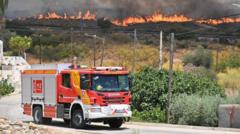
A catastrophic wildfire in southern Spain has claimed the lives of at least 12 people and left 23 others missing, marking one of the deadliest fire incidents in the region's recent history. Emergency services are currently battling the blaze, which has decimated wooded areas near Los Gallardos, Almería, during an intense heatwave.
Background / Context
Andalusia's regional leader, Juanma Moreno, confirmed the staggering toll as hundreds of personnel struggle to contain the inferno. The fire, fueled by record-breaking temperatures reaching 40C (104F), broke out under conditions that have seen extreme wildfire activity across Southern Europe throughout the summer months.
Regional health and emergencies minister Antonio Sanz described the incident as the most devastating blaze Andalusia has ever faced. The fire's rapid expansion, coupled with high temperatures, created a complex environment for responders, with some victims unfortunately failing to follow designated evacuation routes while attempting to flee the encroaching flames.
Key Developments
- At least 12 individuals have been confirmed dead, with 23 people reported as missing, including suspected British nationals.
- Regional officials suggest a collapsed power line pole may have ignited the blaze, though electricity company Endesa has disputed the ownership and status of the line.
- Emergency crews, including the Military Emergency Unit (UME), have deployed over 200 soldiers and 70 vehicles to assist with search, rescue, and containment efforts.
- Approximately 1,000 residents have been evacuated from the area as local authorities struggle to manage the rapid spread and road closures.
Analysis
The devastation in Almería highlights the growing vulnerability of the Mediterranean region to climate-driven disasters. With Europe warming twice as fast as the global average, experts from the Copernicus climate service note that these environmental conditions are significantly increasing the frequency and intensity of summer wildfires across the continent.
Furthermore, the economic and logistical strain on emergency services in Spain is becoming increasingly apparent. Despite Prime Minister Pedro Sánchez announcing the largest-ever wildfire response plan earlier this year, the sheer scale of the incident underscores the difficulty in protecting local populations and holidaymakers from such rapid, extreme events.
What This Means
The tragedy in Bédar serves as a stark warning regarding the future of European wildfire management and climate adaptation. As the World Weather Attribution group continues to link worsening fire seasons to human-caused climate change, the pressure on regional governments to implement more robust infrastructure maintenance and evacuation protocols will likely reach a critical point.
Conclusion
As the search for the missing continues, officials warn that the death toll may rise significantly in the coming days. The international community watches closely as Spain grapples with this profound humanitarian and environmental crisis.